
David Bermejo takes part in the EURECA-PRO STEM Scientific Comic initiative, bringing artificial intelligence and social network analysis closer to secondary school students

On 20 November, David Bermejo Martínez, a member of the SALBIS Research Group and lecturer in the Department of Nursing and Physiotherapy at the University of León, took part in the STEM Scientific Comic activity organised within the framework of EURECA-PRO.
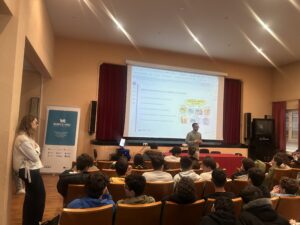
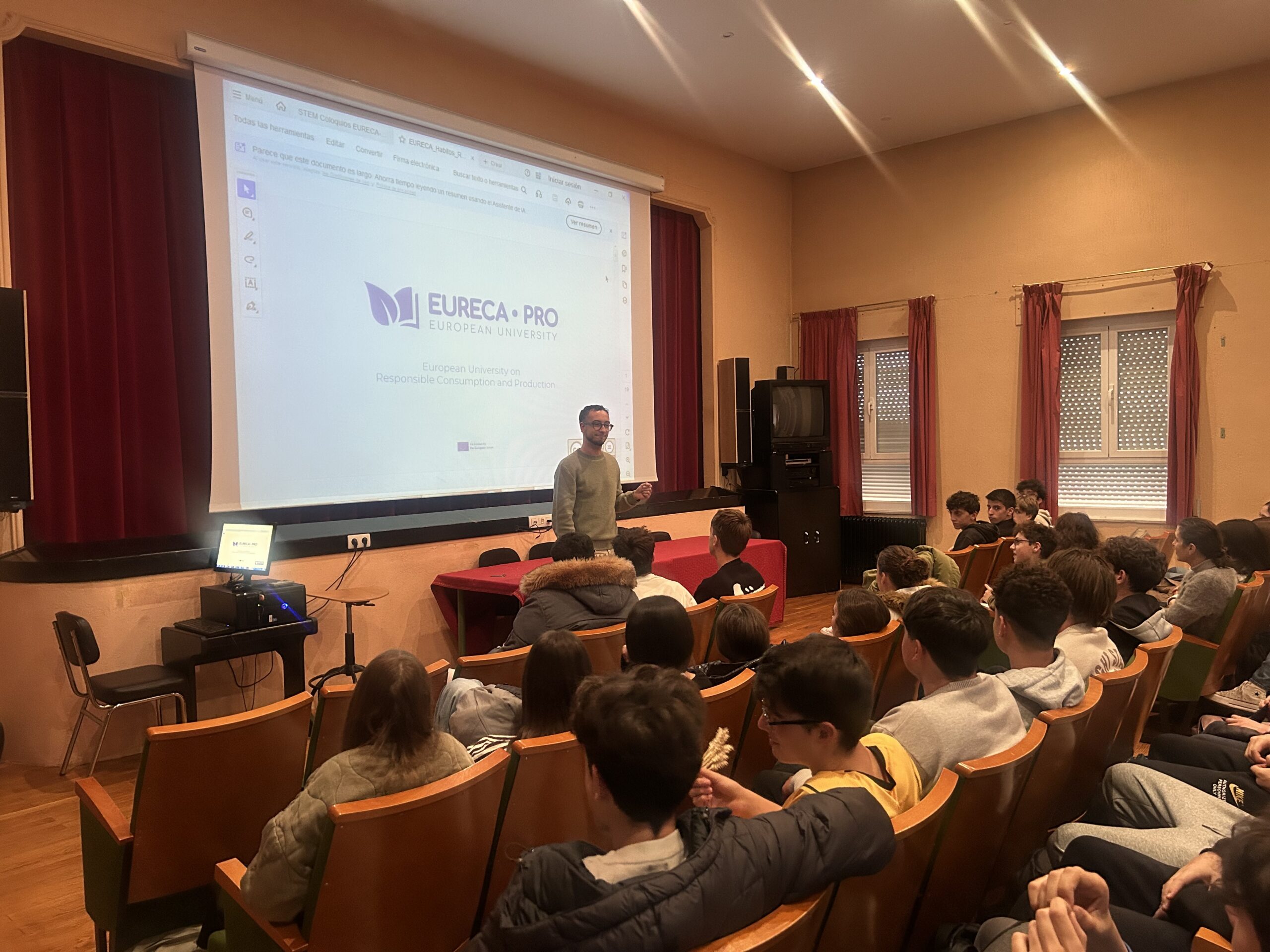
The activity was held at IES Ordoño II in León and was aimed at students in the 2nd and 4th years of Compulsory Secondary Education. Its purpose was to bring scientific research closer to students through short talks adapted to their level, which will later serve as the basis for the creation of a scientific comic.
David Bermejo’s talk, entitled “What Can a Social Network Know About Us? Science, Apps and Artificial Intelligence to Study Sexual Health”, focused on showing, in a simple and visual way, how social network analysis and artificial intelligence can be used to study behaviours related to sexual health.
Drawing on findings and approaches developed in his doctoral research, he explained how connections between people and digital applications can help identify patterns, communities and particularly relevant nodes. The talk therefore highlighted the potential of interdisciplinary work combining health sciences, mathematics and computer science to better understand real health problems and contribute to the design of prevention strategies tailored to the characteristics of different populations.
The session formed part of a broader programme of talks organised by EURECA-PRO in secondary schools across the province of León during November. Following these sessions, students will create their own scientific comics during December and January. A selection of the best works will be exhibited at Expociencia 2027, both in León and Ponferrada.
Through this participation, SALBIS continues to strengthen its commitment to science communication, knowledge transfer and bringing university research closer to pre-university students.