

The Voices of Ceuta: A Nursing Perspective

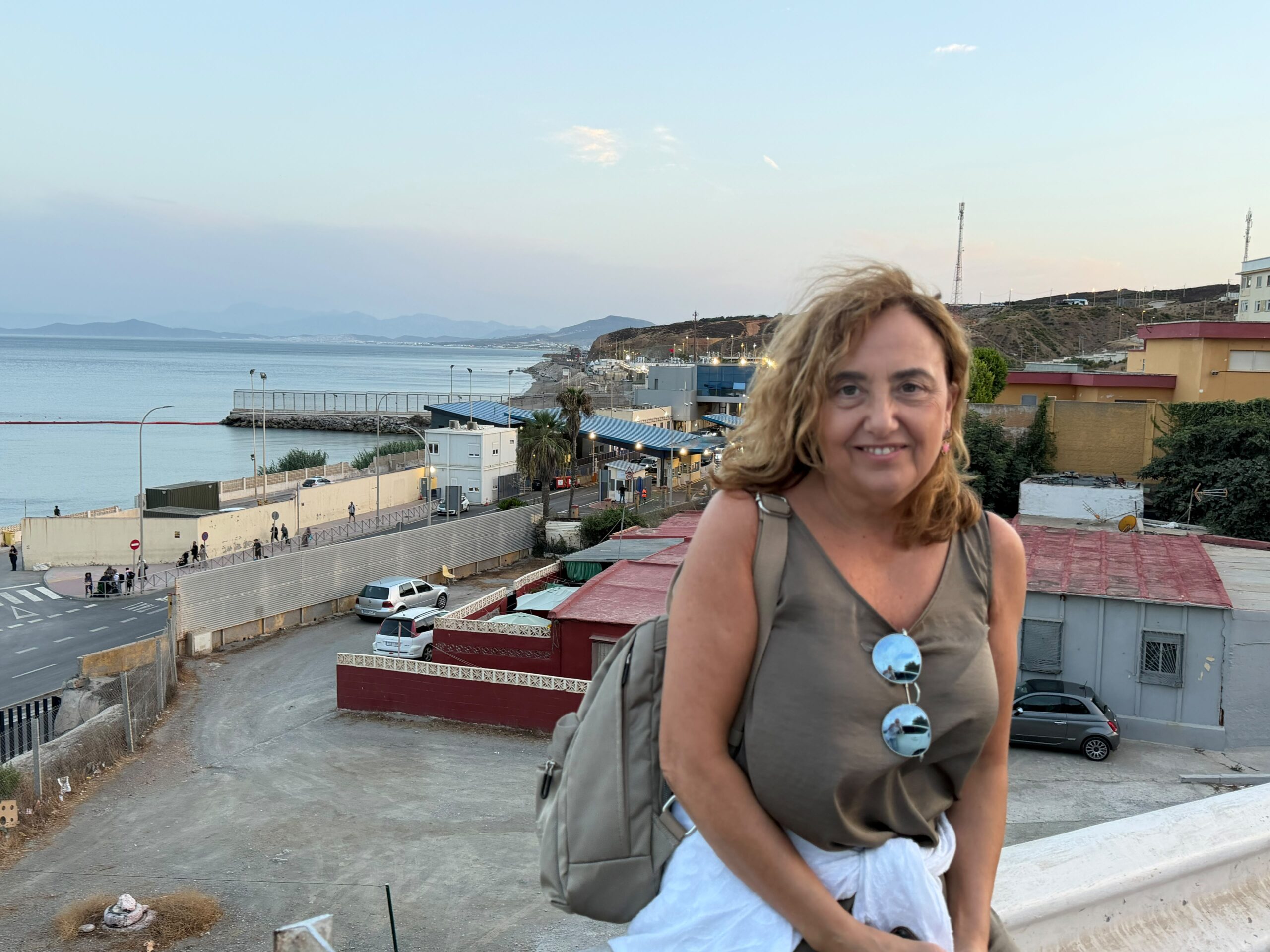
Pilar Marqués-Sánchez, a member of the SALBIS Research Group, travelled to Ceuta on 31 July 2026 to witness the migration crisis first-hand.
Her visit was motivated by both her commitment to care as a nurse and her curiosity as a researcher. The aim was to identify questions that could be addressed by the research group in collaboration with other stakeholders. One of her priorities was to explore the potential for analysing interpersonal networks using Social Network Analysis methodology.
“Nurses are sensitive to human vulnerability, and in times of tragedy there are many life stories to which we must respond out of our shared humanity.” In this context, a close relationship between safety and health became evident.
On 25 April 2003, a group of nurses described the values underpinning nursing practice in the “Espinoso de Compludo Manifesto”, including the value of “safety”. Marqués was able to observe first-hand how particularly important this concept becomes in the context of a humanitarian crisis.
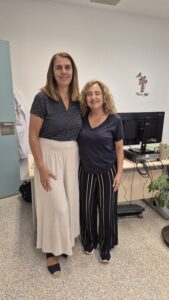
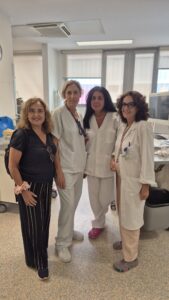
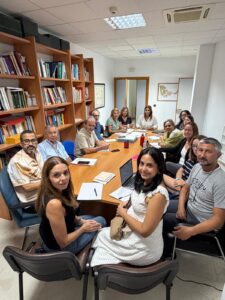
Her agenda included several meetings with the Health Department of the Government of Ceuta, the President of the Ceuta College of Nursing, and nurses and physicians from the University Hospital. She also had the opportunity to interact directly with migrants and residents of Ceuta. In total, she carried out 49 direct interactions with local residents, central government experts and migrants, together with thousands of direct observations.
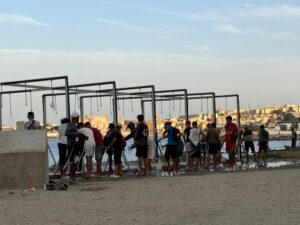
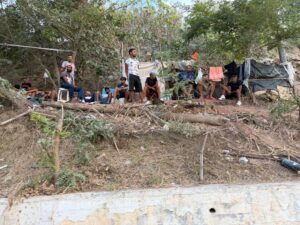
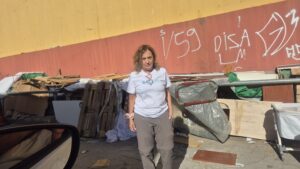
She visited bathing-water monitoring sites, settlements on beaches, in the hills, parks and streets, industrial estates, and sports facilities. Each setting had its own characteristics and personal stories. While some people sheltered in small tents or similar structures, others relied on cardboard, branches, or had no shelter at all. One of the most striking settlements was in Príncipe, spontaneously organised by local residents to protect girls and women.
Through this small-scale fieldwork, she was able to gather information showing the close relationship between health and safety, summarised below:
What happens during the first moments of a large-scale forced arrival?
Fractures, drowning, dislocations, hypothermia, hypoglycaemia, anxiety crises among migrants and local residents, deaths, and spontaneous assistance from members of the public. Healthcare services become overwhelmed. There is a desperate struggle for survival.
What happens in the hours following a large-scale forced arrival?
People begin searching for food and shelter. There is uncertainty among both migrants and the local population, alongside solidarity and assistance from neighbourhood residents, while healthcare services remain overwhelmed.
What happens during the first 2–3 days following a large-scale forced arrival?
Migrants seek support from local residents for their survival and safety needs. Assaults, poor sanitation, differing behaviours in relation to road traffic, overcrowding in supermarkets, close interaction between migrants and residents, neighbourhood solidarity initiatives, institutional organisation to meet basic needs, planning and management of temporary accommodation, and continued pressure on healthcare services are observed.
What happens 25 days after a large-scale forced arrival?
Micro-networks and small-scale forms of organisation begin to emerge. Crime may have physical and mental health consequences. Employment opportunities for migrants and small informal sales activities develop as means of survival. Property rentals increase, alongside social anxiety and uncertainty, overcrowding in reception centres, management of communicable disease prevention, institutional overload, social disagreement, and desperation that places people’s wellbeing at risk.
A final reflection
“Unfortunately, these days have been extremely rich in terms of experience. When I asked local people, ‘How could we improve things next time?’, the anguished response was: there cannot be a next time.
Nurses are always there to accompany people, and during crises our perspective almost intimately merges with that of those who need us. We are fortunate to be able to share in their tragedies, and fortunate that, even without knowing our names, they may remember us as part of their life story.
I would like to call for courage in providing care on the front line of tragedy. There are certainly risks, but we have been trained to care in situations of risk and to care for what is human.”
Acknowledgements
Our thanks to the Health Department of the Government of Ceuta, the Director-General for Health and her team, the President of the Ceuta College of Nursing, the nurses and physicians of the University Hospital of Ceuta, Luis Boya, the people of Ceuta, and the migrants who allowed me to share in their tragedy.